This document includes findings from surveys of organisational leaders and staff in the Framework’s first few months. The Department of Justice engaged First Person Consulting to measure how the Framework is promoting the safety and wellbeing of children and young people, including its role in supporting cultural change in organisations.
Self-reported understanding of the Framework by leaders of in-scope organisations
The graph below is a 100% stacked bar chart showing self-reported understanding of the Framework by leaders of in-scope organisations. It is broken into five categories including information sharing provisions, Office of the Independent Regulator, Reportable Conduct Scheme, Universal Principle for Aboriginal Cultural Safety and Child and Youth Safe Standards.
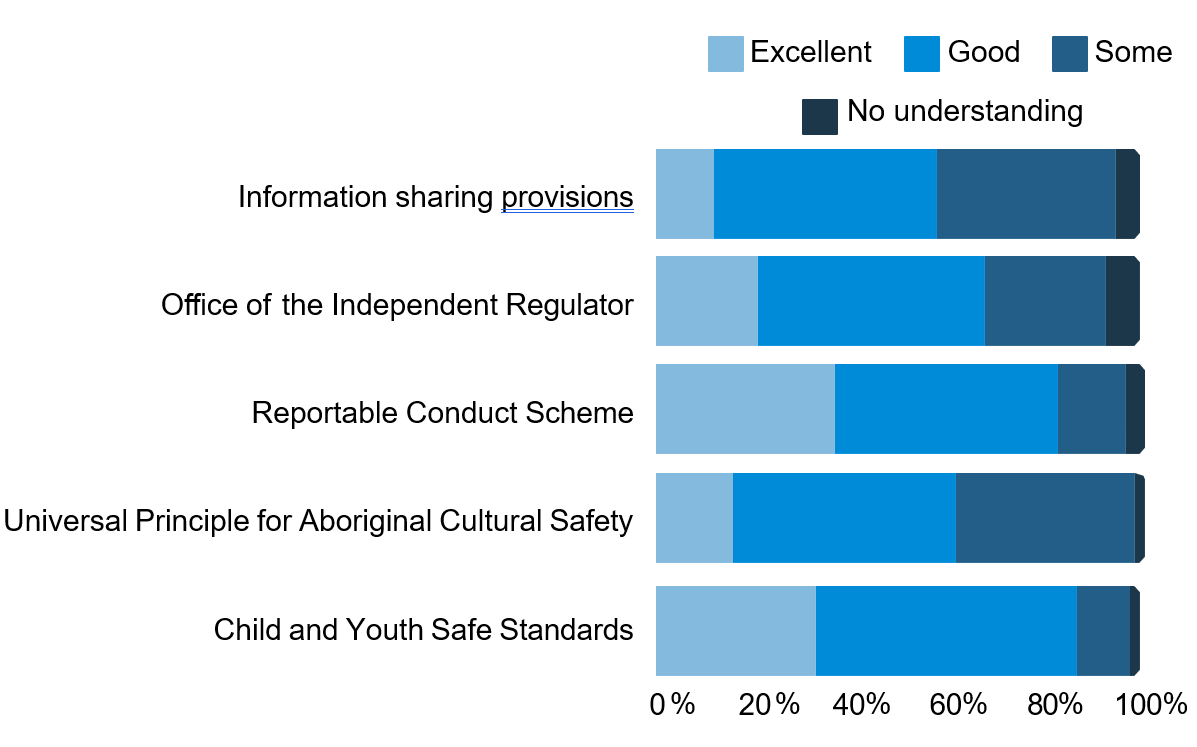
Leaders of organisations surveyed reported an increase in skills related to compliance after the implementation of the Framework including enhanced training, updated policies, better reporting mechanisms, and increased awareness and communication about child safety.
90% of leaders from organisations with at least 20 staff members reported having an excellent or good understanding of the Child and Youth Safe Standards.
79% of leaders from smaller organisations reported having an excellent or good understanding of the Child and Youth Safe Standards.
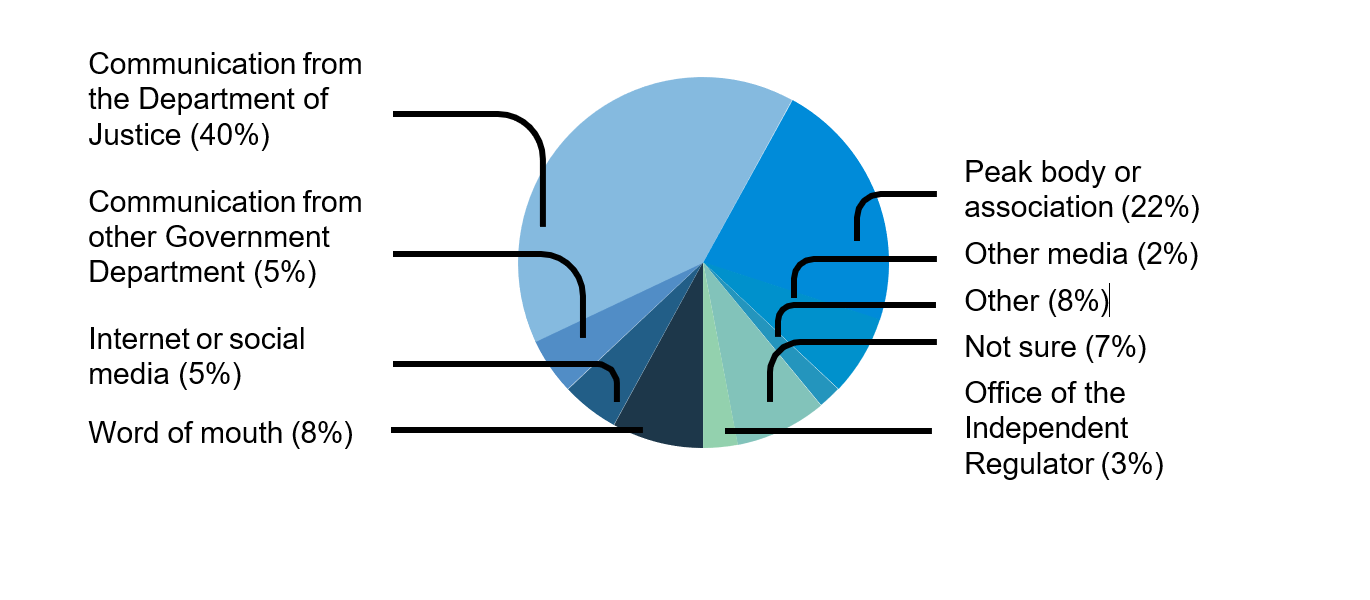
How organisational leaders surveyed said they first became aware of the Child and Youth Safe Organisations Framework
The pie graph below shows how organisational leaders who were surveyed, said they became aware of the Framework. 40% said they became aware of it through communication from the Department of Justice, 5% through communication from another Government Department, 5% through internet or social media, 8% through word of mouth, 22% through a peak body or association, 2% through other media, 8% other, 7% not sure and 3% through the Office of the Independent Regulator.
Self-reported levels of understanding of individuals
70% of individuals surveyed from organisations with 20 or more staff members reported good or excellent understanding of the Child and Youth Safe Standards, compared to 42% of those from smaller organisations.
80% feel confident to raise the issue of a colleague not following a child-safe policy.
79% said they understood the issue of child abuse well.
79% know who to report to within their organisation if they became aware of harm to a child or young person.
79% were motivated to keep learning about child abuse.
Significant or meaningful changes organisations have made to comply with the Framework
Organisational leaders surveyed reported actions and changes within five key domains to comply with the Framework.
- Communicate and improve awareness of child and youth safety within their organisation considering the new CYSOF standards. Examples of this include communication staff on organisational changes, general awareness-raising, and changes to onboarding and induction procedures.
- Additional and improved training for staff and volunteers to maximise compliance. This includes mandatory briefings, online learning modules, and ongoing staff training. One respondent noted that this has resulted in a more rigorous hiring process, ensuring staff complete child protection certifications and more stringent reference criteria prior to onboarding.
- Review and strengthen reporting and complaints mechanisms to ensure child safety. Examples of this include the introduction of child-friendly and accessible complaint and feedback forms and raising awareness about complaints processes among children, young people, and parents. Some respondents noted that efforts are being made to engage more with young people to hear their views on areas for improvement, implementation of compliance activities, and decision-making processes.
- Review and update internal policies and procedures to improve compliance with the Framework. This includes auditing and existing polices, guidelines, and practice manuals, and creating new internal policies and frameworks where required. Changes have also been made to organisational structures, including the introduction of working groups, and recruiting new staff to meet the resource needs for effective compliance.
- Changes to information tools and implementing information sharing strategies. These strategies aim to communicate relevant information to their communities, including parents. For example, some organisations have updated their website.
Self-reported challenges
Organisational leaders surveyed said challenges included organisational resistance to change, limited resources, and the need for more practical tools and templates.
Respondents emphasised the need for more targeted training sessions, better communication, and practical resources to support compliance. Successes included better awareness and competency among staff, while challenges highlighted the need for cultural and structural changes within organisations.
Universal Principle for Aboriginal Cultural Safety
The survey found the Universal Principle for Aboriginal Cultural Safety was more difficult for smaller organisations to comply with compared to large ones.
Similar to organisational understanding as reported by leaders, the Universal Principle for Aboriginal Cultural Safety was less well understood by staff in smaller organisations compared to large ones.
65% of leaders from larger organisations reported an excellent or good understanding of the Universal Principle for Aboriginal Cultural Safety.
51% of individuals from larger organisations reported good or excellent understanding.
50% of leaders from smaller organisations reported an excellent or good understanding of the Universal Principle for Aboriginal Cultural Safety.
33% of individuals from smaller organisations reported good or excellent understanding